EV Charger Installation in Rogers, AR
Connecting homeowners, commercial facility operators, and businesses in Rogers with independent, licensed local electrical contractors specializing in EV Charger Installation. Ensure your electrical systems meet National Electrical Code (NEC) standards, local municipal permitting rules, and regional utility requirements.
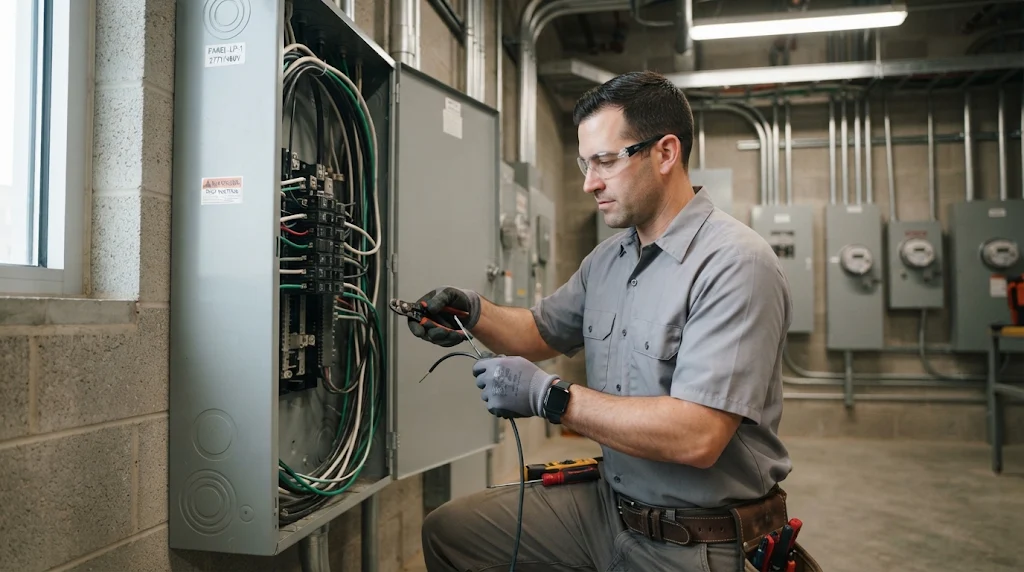
Dedicated Level 2 EV Charging Stations for Rogers Commuters & Lake Estates
Rogers has become one of Northwest Arkansas's primary hubs for electric vehicle adoption, with residents commuting daily along I-49 between Bentonville corporate campuses and Springdale logistics centers. Relying on standard 120-volt convenience outlets for overnight charging is impractical, as Level 1 charging adds merely 3 to 5 miles of range per hour. Installing a dedicated 240V Level 2 charging station restores 25 to 40 miles of range per hour, ensuring full battery replenishment overnight.
Under National Electrical Code (NEC) Article 625, EV charging is classified as a continuous load requiring circuit conductors and breakers to be engineered at 125% of the charger's rating. For example, a 48-amp hardwired Level 2 charging station requires a dedicated 60-amp double-pole breaker and minimum 6 AWG copper wire. Independent contractors serving Rogers perform NEC load calculations, run conduit safely to garages or outdoor parking pads, and install commercial-grade charging hardware permitted through the City of Rogers.
Level 2 Dedicated EV Charging Stations, Continuous Load Engineering & Safe Wiring
Electric vehicle supply equipment (EVSE) represents one of the largest single continuous electrical loads added to residential and commercial electrical infrastructure. Standard Level 1 charging via a 120-volt convenience receptacle delivers only 1.2 to 1.4 kilowatts per hour (roughly 3 to 5 miles of range per hour of charging), often taking 24 to 36 hours for a full charge.
Level 2 240-volt charging stations elevate delivery to between 7.2 kW and 19.2 kW (drawing 30 to 80 amperes), replenishing full battery range in 4 to 8 hours. However, under National Electrical Code (NEC) Article 625, EV charging is classified as a continuous electrical load—defined as a load continuing for 3 hours or more. Consequently, the branch circuit, overcurrent protection device (breaker), and conductors must be sized at 125% of the charger's continuous rating.
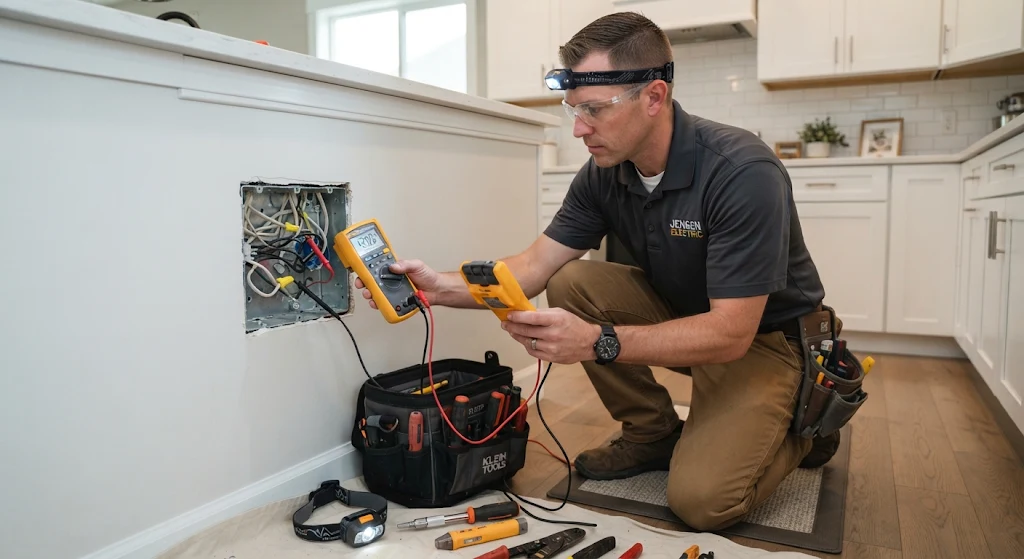
Common Situations Requiring EV Charger Installation
Key signs, property conditions, and project needs that indicate professional electrical evaluation is appropriate in Rogers.
- Inadequate overnight charging speed from factory 120V Level 1 cords failing to restore daily commuting battery range.
- Noticeable heat, softening, or burning odor on standard 120V garage outlets caused by prolonged maximum continuous current draw.
- Main electrical service panel lacking open breaker space or possessing insufficient calculated spare capacity for a new 40A to 60A breaker.
- Acquisition of an electric vehicle (Tesla, Ford, Rivian, Hyundai, GM) requiring a dedicated 240V high-speed home charging station.
- Desire to optimize electrical costs by scheduling overnight off-peak charging through smart, connected Level 2 EVSE units.
- Requirement for commercial workplace or retail customer charging stations featuring weather-resistant NEMA 4X enclosures and payment management.
Structured Diagnostic & Installation Protocols
Before installing dedicated EV wiring, an independent contractor executes an NEC Article 220 service load calculation to verify that the home's existing service can safely handle the additional continuous electrical demand. If panel capacity is adequate, the technician routes a dedicated circuit using heavy-gauge conductors (such as 6 AWG copper for 48A hardwired chargers, or 4 AWG copper depending on conduit ambient temperature adjustments).
Contractors configure either a hardwired station or an industrial-grade NEMA 14-50 receptacle. For receptacle installations, NEC mandates upstream GFCI breaker protection in the panel and commercial-grade outlets (such as Hubbell or Bryant) to avoid the terminal melting and thermal failure associated with inexpensive residential-grade outlets under hours of sustained 32A to 40A loading.
Avoid Standard Residential Outlets for EVSE: Standard consumer-grade dryer or range receptacles sold in home centers are not engineered for repeated daily insertion cycles or 8 consecutive hours of maximum continuous load. Utilizing professional-grade EV-rated equipment installed by licensed contractors prevents dangerous terminal overheating and nuisance tripping.
Compliance & Utility Clearances in Rogers
The City of Rogers Community Development Department oversees electrical permitting and safety inspections throughout Rogers. Substantial projects—including service modernizations, panel replacements, new branch circuits, transfer switches, and commercial wiring—require formal permits and mandatory inspections to verify code compliance.
Utility coordination is managed through Carroll Electric Cooperative / SWEPCO. When an electrical project requires utility power interruption, meter base upgrades, or transformer coordination, licensed contractors schedule clearances with the utility in compliance with municipal inspection approvals.
Schedule EV Chargers in Rogers
Connect with an independent electrical contractor serving Rogers. Call our referral desk at (888) 605-9975 to discuss your project with an intake coordinator.
Other Electrical Services in Rogers
Discover additional electrical service categories available from independent contractors in Rogers.
Electrical Panel Upgrades
Modernizing obsolete or undersized 100-amp panels to 200-amp or 400-amp service to support heavy modern electrical loads safely.
Panel Upgrades in Rogers →FAQs: EV Charger Installation in Rogers, AR
Specific questions regarding EV Charger Installation projects, local permitting, and independent contractor matching in Rogers.
A 40-amp charger can plug into a standard NEMA 14-50 receptacle on a 50A circuit, adding ~30 miles of range per hour. A 48-amp charger must be permanently hardwired on a 60A circuit and adds ~40-45 miles per hour.
Yes. The City of Rogers Community Development Department requires a permit and inspection for any new 240-volt branch circuit to ensure proper conductor sizing and breaker protection.
If physical slots are unavailable, a contractor can evaluate if tandem breakers are permitted, install a subpanel, or integrate an automated smart energy management device that balances EV charging with heavy household loads.
Yes, provided the station is rated NEMA 3R or NEMA 4X for weather resistance. Outdoor circuits must feature sealed weather-resistant disconnects and corrosion-resistant conduit.
Yes. Most smart Level 2 charging stations allow owners to program automated charging schedules via smartphone apps to charge during late-night off-peak hours when grid strain is lowest.