Generator Installation in Little Rock, AR
Connecting homeowners, commercial facility operators, and businesses in Little Rock with independent, licensed local electrical contractors specializing in Generator Installation. Ensure your electrical systems meet National Electrical Code (NEC) standards, local municipal permitting rules, and regional utility requirements.
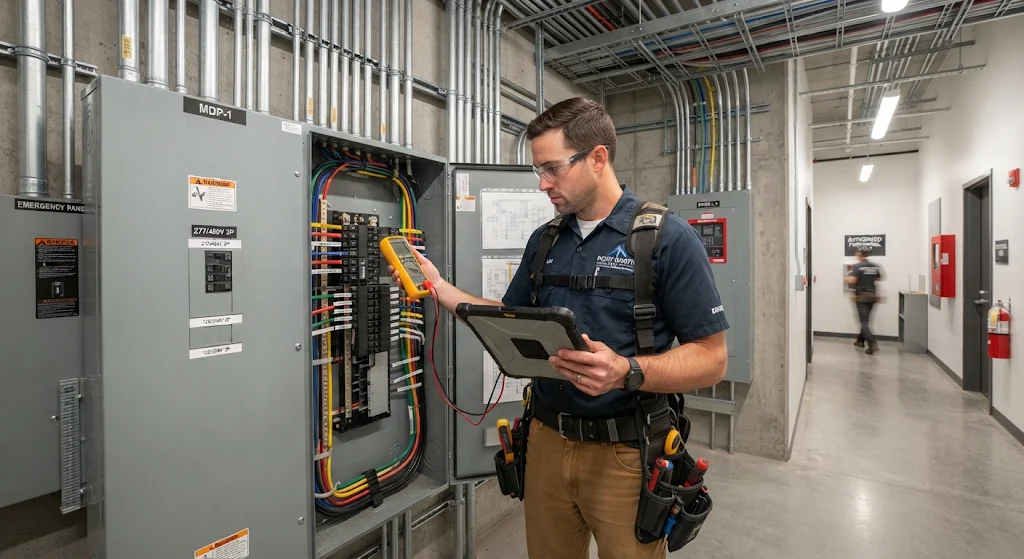
Standby Emergency Power Systems for Severe Arkansas Weather in Little Rock
Central Arkansas sits squarely in a region prone to intense convective thunderstorms, straight-line derecho winds, tornadic supercells, and severe winter ice storms. In Little Rock, fallen oak and pine limbs frequently sever overhead power distribution lines along Entergy Arkansas utility easements, leaving homeowners and commercial facilities without electricity for multiple consecutive days. In neighborhoods with private drainage pumps, medical life-support needs, or refrigerated storage, prolonged outages create severe safety and financial risks.
A permanently installed home standby generator provides automated resilience. Operating on natural gas from CenterPoint Energy or on-site liquid propane (LP), the system pairs with an Automatic Transfer Switch (ATS) installed between the utility meter and main distribution panel. When the ATS microprocessor detects utility voltage collapse, it signals the generator to start, verifies frequency and voltage stability, and transfers priority household circuits within 10 to 20 seconds. Independent contractors ensure proper equipment setbacks from property lines and bedroom windows in compliance with Little Rock building and noise ordinances.
Whole-Home & Facility Standby Power Systems, Automatic Transfer Switches (ATS) & Critical Loads
Severe weather events, ice storms, and intense convective thunderstorm systems across Arkansas can interrupt grid power distribution for hours or days. Standby generator systems provide automatic emergency electrical generation, transitioning a property from utility power to backup power seamlessly when grid voltage collapses.
A permanently installed standby generator operates in tandem with an Automatic Transfer Switch (ATS). When the ATS onboard microprocessor detects utility voltage sag or complete phase loss, it commands the generator engine to start, verifies stable output voltage and 60 Hz frequency, and transfers designated electrical loads within 10 to 30 seconds, maintaining refrigeration, heating, well pumps, and medical equipment.
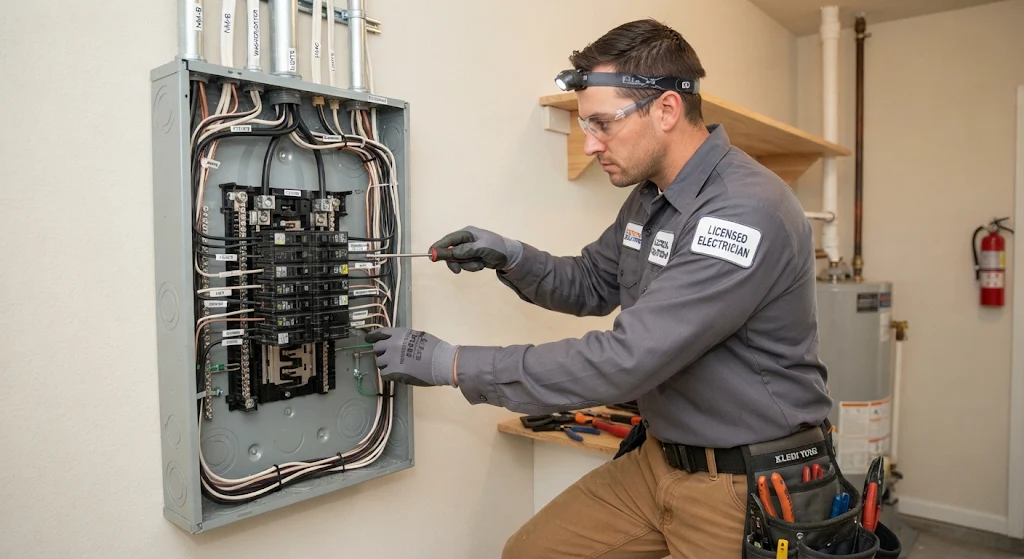
Common Situations Requiring Generator Installation
Key signs, property conditions, and project needs that indicate professional electrical evaluation is appropriate in Little Rock.
- Frequent grid power outages resulting from severe seasonal weather, high winds, ice accumulation, or rural distribution line exposure.
- Critical need to maintain medical life-support equipment, CPAP units, or specialized home health devices without interruption.
- Reliance on private well water pumps, sump pumps, or wastewater lift stations that require continuous electrical power to prevent property flooding.
- Risk of extensive refrigerated product loss or inventory spoilage in commercial kitchens, convenience markets, and food handling facilities.
- Desire to replace hazardous portable gas generators, extension cord tangles, and manual fueling routines with a permanently wired automatic solution.
- Requirement for continuous operation of residential HVAC heating and cooling systems during extreme sub-freezing winter storms or humid summer heat waves.
Structured Diagnostic & Installation Protocols
Standby generator installation begins with precise load profiling. Technicians calculate whether the project requires whole-property coverage (requiring 22 kW to 48 kW or commercial three-phase units) or essential-circuits coverage (typically 14 kW to 18 kW managed via an ATS with smart load shedding modules). Load shedding automatically sheds high-draw circuits like secondary air conditioning or electric water heaters if total load nears generator capacity.
Installation encompasses pouring a code-compliant level equipment pad, trenching underground electrical conduits for power and low-voltage control wiring, connecting to natural gas or liquid propane (LP) fuel supplies with appropriately sized fuel lines, and installing the ATS adjacent to the main electrical panel. Technicians test the system under simulated utility loss, verifying automatic startup, voltage regulation, frequency stability, and automated cool-down cycles.
Strict Prohibition of Hazardous Backfeeding: Never connect a generator directly into an ordinary wall outlet using a double-male plug ('suicide cord'). This hazardous practice backfeeds high-voltage electricity into neighborhood utility lines, creating lethal electrocution hazards for utility linemen working to restore storm damage. Standby generators must utilize an interlocked transfer switch or code-approved transfer device.
Municipal Compliance in Little Rock
The City of Little Rock Planning & Development Department (Building Codes Division) oversees electrical permitting and safety inspections throughout Little Rock. Substantial projects—including service modernizations, panel replacements, new branch circuits, transfer switches, and commercial wiring—require formal permits and mandatory inspections to verify code compliance.
Utility coordination is managed through Entergy Arkansas. When an electrical project requires utility power interruption, meter base upgrades, or transformer coordination, licensed contractors schedule clearances with the utility in compliance with municipal inspection approvals.
Schedule Generators in Little Rock
Connect with an independent electrical contractor serving Little Rock. Call our referral desk at (888) 605-9975 to discuss your project with an intake coordinator.
Call (888) 605-9975 NowHow WATT911 Handles Generator Installation Inquiries in Little Rock
WATT911 is an independent referral network connecting consumers with independent local electrical contractors. WATT911 does not directly perform electrical contracting work, employ technicians, or own electrical branches in Little Rock.
When you call (888) 605-9975, our intake coordinators gather your project details and connect you with available independent contractors licensed by the Arkansas Department of Labor and Licensing (Board of Electrical Examiners) who serve Little Rock.
Contractors operate independently, determining their own diagnostic fees, project quotes, and scheduling. You contract directly with the responding contractor, ensuring transparent terms and direct accountability.
Connect with a Little Rock Electrician
Have questions about Generator Installation for your home, commercial facility, or industrial property in Speak with our referral desk today.
Call (888) 605-9975 NowOther Electrical Services in Little Rock
Discover additional electrical service categories available from independent contractors in Little Rock.
Electrical Repair
Troubleshooting circuit faults, tripped breakers, intermittent power, damaged receptacles, and dangerous wiring conditions safely.
Repair in Little Rock →Electrical Panel Upgrades
Modernizing obsolete or undersized 100-amp panels to 200-amp or 400-amp service to support heavy modern electrical loads safely.
Panel Upgrades in Little Rock →EV Charger Installation
Dedicated 240V 40A to 60A Level 2 EV charging stations, hardwired circuits, load calculations, and energy management systems.
EV Chargers in Little Rock →Commercial Electrician
Commercial wiring, three-phase distribution, retail buildouts, LED retrofits, tenant improvements, and scheduled facility maintenance.
Commercial in Little Rock →FAQs: Generator Installation in Little Rock, AR
Specific questions regarding Generator Installation projects, local permitting, and independent contractor matching in Little Rock.
Most Little Rock residences utilize standby generators ranging from 18 kW to 26 kW. An 18 kW to 22 kW unit can power essential lighting, refrigeration, electronics, and a 3-ton to 4-ton central air conditioner via smart load-shedding modules.
An ATS utilizes a mechanical interlock that physically disconnects the home from Entergy Arkansas power lines before connecting generator power. This prevents lethal backfeeding into utility lines where technicians are working to restore storm damage.
In many cases, yes. A 22 kW standby generator requires between 250,000 and 320,000 BTUs of natural gas at full load. Independent contractors coordinate with CenterPoint Energy to verify meter pressure and line capacity before final hookup.
Yes. Little Rock municipal code regulates residential sound levels. Modern enclosed standby generators operate at approximately 65 to 68 dB(A) at 23 feet, which complies with residential standards when positioned with proper property line setbacks.
Yes, provided the engine has an uninterrupted natural gas fuel supply and proper engine oil levels. Manufacturers recommend checking engine oil levels every 48 to 72 hours of continuous run-time during extended disaster recoveries.