EV Charger Installation in Jonesboro, AR
Connecting homeowners, commercial facility operators, and businesses in Jonesboro with independent, licensed local electrical contractors specializing in EV Charger Installation. Ensure your electrical systems meet National Electrical Code (NEC) standards, local municipal permitting rules, and regional utility requirements.
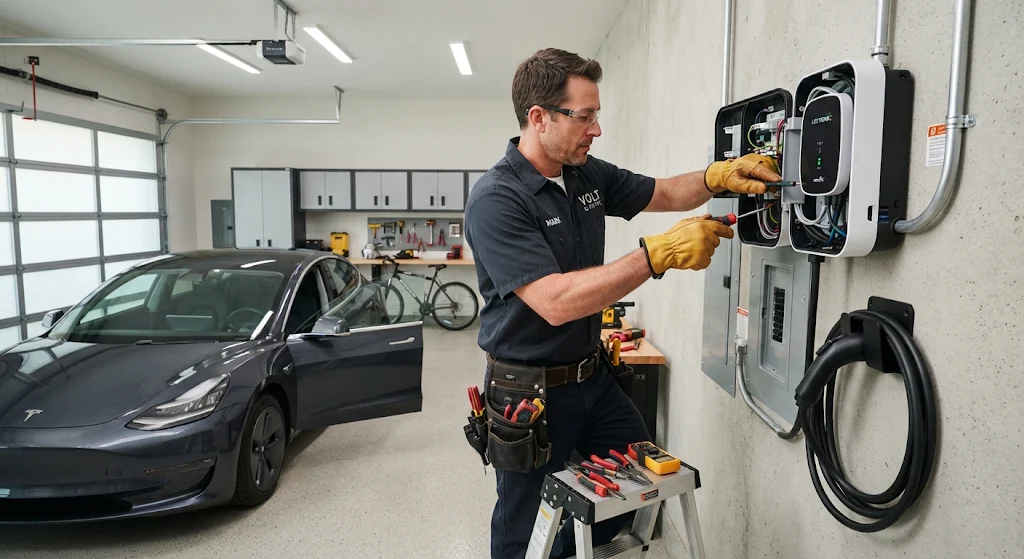
Dedicated Level 2 EVSE Infrastructure for Jonesboro Commuters & Commercial Fleets
Electric vehicle adoption is accelerating across Jonesboro, driven by regional healthcare professionals, Arkansas State University faculty and students, and commercial fleet operators. A standard 120-volt Level 1 cord trickle-charges at only 3 to 5 miles of range per hour, which is inadequate for daily commuting across Northeast Arkansas. Installing a dedicated 240V Level 2 charging station increases charging speeds significantly, restoring 25 to 40 miles of range per hour overnight.
Under National Electrical Code (NEC) Article 625, electric vehicle charging is categorized as a continuous load requiring branch circuit conductors and overcurrent devices to be sized at 125% of the charger's continuous draw. For example, a 48-amp hardwired charging station requires a dedicated 60-amp double-pole circuit breaker and 6 AWG copper conductors. Independent contractors in Jonesboro perform NEC load calculations, run conduit safely to garages or carports, and handle permitting through the City of Jonesboro.
Level 2 Dedicated EV Charging Stations, Continuous Load Engineering & Safe Wiring
Electric vehicle supply equipment (EVSE) represents one of the largest single continuous electrical loads added to residential and commercial electrical infrastructure. Standard Level 1 charging via a 120-volt convenience receptacle delivers only 1.2 to 1.4 kilowatts per hour (roughly 3 to 5 miles of range per hour of charging), often taking 24 to 36 hours for a full charge.
Level 2 240-volt charging stations elevate delivery to between 7.2 kW and 19.2 kW (drawing 30 to 80 amperes), replenishing full battery range in 4 to 8 hours. However, under National Electrical Code (NEC) Article 625, EV charging is classified as a continuous electrical load—defined as a load continuing for 3 hours or more. Consequently, the branch circuit, overcurrent protection device (breaker), and conductors must be sized at 125% of the charger's continuous rating.
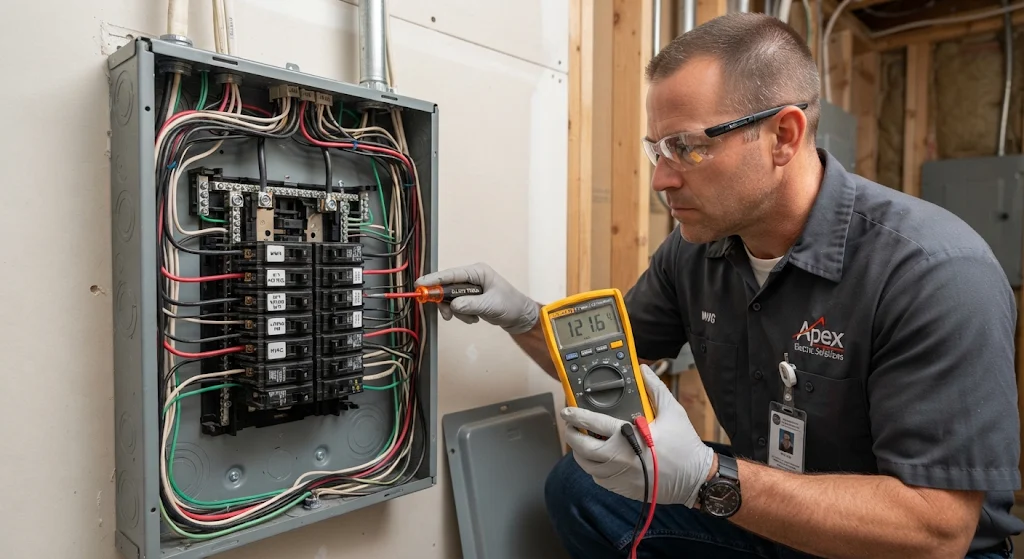
Common Situations Requiring EV Charger Installation
Key signs, property conditions, and project needs that indicate professional electrical evaluation is appropriate in Jonesboro.
- Inadequate overnight charging speed from factory 120V Level 1 cords failing to restore daily commuting battery range.
- Noticeable heat, softening, or burning odor on standard 120V garage outlets caused by prolonged maximum continuous current draw.
- Main electrical service panel lacking open breaker space or possessing insufficient calculated spare capacity for a new 40A to 60A breaker.
- Acquisition of an electric vehicle (Tesla, Ford, Rivian, Hyundai, GM) requiring a dedicated 240V high-speed home charging station.
- Desire to optimize electrical costs by scheduling overnight off-peak charging through smart, connected Level 2 EVSE units.
- Requirement for commercial workplace or retail customer charging stations featuring weather-resistant NEMA 4X enclosures and payment management.
Structured Diagnostic & Installation Protocols
Before installing dedicated EV wiring, an independent contractor executes an NEC Article 220 service load calculation to verify that the home's existing service can safely handle the additional continuous electrical demand. If panel capacity is adequate, the technician routes a dedicated circuit using heavy-gauge conductors (such as 6 AWG copper for 48A hardwired chargers, or 4 AWG copper depending on conduit ambient temperature adjustments).
Contractors configure either a hardwired station or an industrial-grade NEMA 14-50 receptacle. For receptacle installations, NEC mandates upstream GFCI breaker protection in the panel and commercial-grade outlets (such as Hubbell or Bryant) to avoid the terminal melting and thermal failure associated with inexpensive residential-grade outlets under hours of sustained 32A to 40A loading.
Avoid Standard Residential Outlets for EVSE: Standard consumer-grade dryer or range receptacles sold in home centers are not engineered for repeated daily insertion cycles or 8 consecutive hours of maximum continuous load. Utilizing professional-grade EV-rated equipment installed by licensed contractors prevents dangerous terminal overheating and nuisance tripping.
Compliance & Utility Clearances in Jonesboro
The City of Jonesboro Inspections & Code Enforcement oversees electrical permitting and safety inspections throughout Jonesboro. Substantial projects—including service modernizations, panel replacements, new branch circuits, transfer switches, and commercial wiring—require formal permits and mandatory inspections to verify code compliance.
Utility coordination is managed through City Water & Light (CWL). When an electrical project requires utility power interruption, meter base upgrades, or transformer coordination, licensed contractors schedule clearances with the utility in compliance with municipal inspection approvals.
Schedule EV Chargers in Jonesboro
Connect with an independent electrical contractor serving Jonesboro. Call our referral desk at (888) 605-9975 to discuss your project with an intake coordinator.
Other Electrical Services in Jonesboro
Discover additional electrical service categories available from independent contractors in Jonesboro.
Generator Installation
Whole-home and commercial standby generator installation, automatic transfer switches (ATS), and critical circuit power integration.
Generators in Jonesboro →Commercial Electrician
Commercial wiring, three-phase distribution, retail buildouts, LED retrofits, tenant improvements, and scheduled facility maintenance.
Commercial in Jonesboro →Industrial Electrician
Heavy industrial power distribution, 480V motor control centers (MCC), machinery power hookups, transformer substations, and plant maintenance.
Industrial in Jonesboro →FAQs: EV Charger Installation in Jonesboro, AR
Specific questions regarding EV Charger Installation projects, local permitting, and independent contractor matching in Jonesboro.
Installation requires a dedicated 240V circuit (typically 40A to 60A), adequate capacity in the main electrical panel, proper gauge copper wiring, and an electrical permit from the City of Jonesboro.
Hardwiring supports higher continuous charging outputs (up to 48A), eliminates the need for expensive GFCI circuit breakers in the panel, and removes potential plug terminal melting issues.
A contractor can evaluate whether tandem breakers are code-compliant, install a subpanel, or install an intelligent energy management device that dynamically sheds EV load during peak household power usage.
Yes. Commercial properties and medical clinics install dual-port Level 2 chargers or DC fast charging stations to attract visitors and provide employee charging amenities.
CWL customer programs vary, but smart connected Level 2 charging stations allow owners to program automated charging between midnight and 6:00 AM via smartphone apps to optimize grid efficiency.