Generator Installation in Fort Smith, AR
Connecting homeowners, commercial facility operators, and businesses in Fort Smith with independent, licensed local electrical contractors specializing in Generator Installation. Ensure your electrical systems meet National Electrical Code (NEC) standards, local municipal permitting rules, and regional utility requirements.
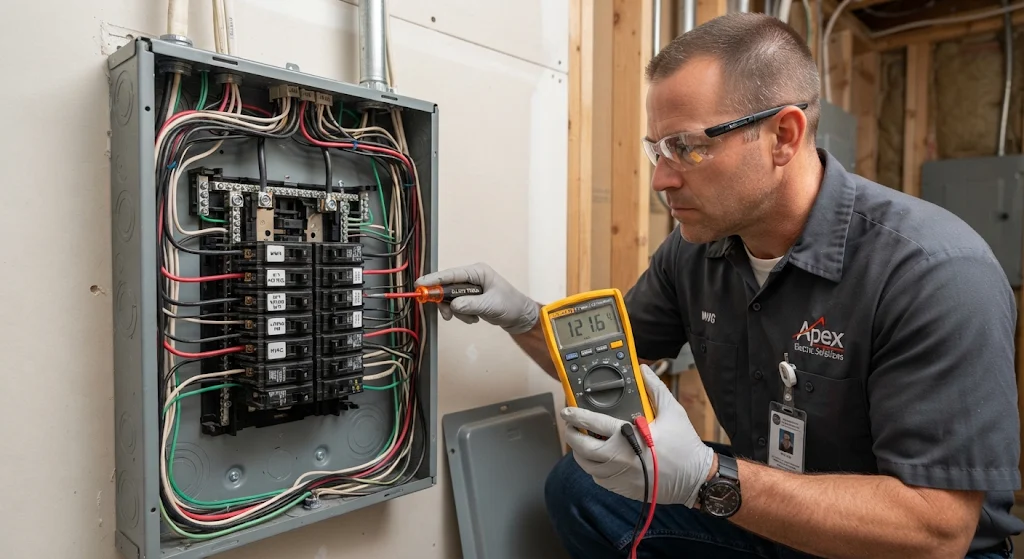
Standby Emergency Power Systems for Severe River Valley Storms in Fort Smith
Fort Smith's geographical position along the Arkansas River Valley exposes it to severe convective storm systems, high straight-line winds, tornadic weather, and destructive winter ice accumulation. When storm fronts topple utility poles and sever overhead lines across Sebastian County, properties can remain without utility power for days. For households relying on private well pumps, sump pumps, or medical life-support equipment, prolonged outages present serious hazards.
A permanently installed standby generator provides whole-property backup power. Operating on natural gas or liquid propane, the generator coordinates with an Automatic Transfer Switch (ATS) installed between the utility meter and main panel. When grid voltage from OG&E drops out, the ATS signals the generator to start, verifies voltage and frequency, and transfers emergency circuits within seconds. Independent electrical contractors in Fort Smith handle equipment pad installation, fuel line integration, conduit routing, and municipal permitting to ensure seamless emergency readiness.
Whole-Home & Facility Standby Power Systems, Automatic Transfer Switches (ATS) & Critical Loads
Severe weather events, ice storms, and intense convective thunderstorm systems across Arkansas can interrupt grid power distribution for hours or days. Standby generator systems provide automatic emergency electrical generation, transitioning a property from utility power to backup power seamlessly when grid voltage collapses.
A permanently installed standby generator operates in tandem with an Automatic Transfer Switch (ATS). When the ATS onboard microprocessor detects utility voltage sag or complete phase loss, it commands the generator engine to start, verifies stable output voltage and 60 Hz frequency, and transfers designated electrical loads within 10 to 30 seconds, maintaining refrigeration, heating, well pumps, and medical equipment.
Common Situations Requiring Generator Installation
Key signs, property conditions, and project needs that indicate professional electrical evaluation is appropriate in Fort Smith.
- Frequent grid power outages resulting from severe seasonal weather, high winds, ice accumulation, or rural distribution line exposure.
- Critical need to maintain medical life-support equipment, CPAP units, or specialized home health devices without interruption.
- Reliance on private well water pumps, sump pumps, or wastewater lift stations that require continuous electrical power to prevent property flooding.
- Risk of extensive refrigerated product loss or inventory spoilage in commercial kitchens, convenience markets, and food handling facilities.
- Desire to replace hazardous portable gas generators, extension cord tangles, and manual fueling routines with a permanently wired automatic solution.
- Requirement for continuous operation of residential HVAC heating and cooling systems during extreme sub-freezing winter storms or humid summer heat waves.
Structured Diagnostic & Installation Protocols
Standby generator installation begins with precise load profiling. Technicians calculate whether the project requires whole-property coverage (requiring 22 kW to 48 kW or commercial three-phase units) or essential-circuits coverage (typically 14 kW to 18 kW managed via an ATS with smart load shedding modules). Load shedding automatically sheds high-draw circuits like secondary air conditioning or electric water heaters if total load nears generator capacity.
Installation encompasses pouring a code-compliant level equipment pad, trenching underground electrical conduits for power and low-voltage control wiring, connecting to natural gas or liquid propane (LP) fuel supplies with appropriately sized fuel lines, and installing the ATS adjacent to the main electrical panel. Technicians test the system under simulated utility loss, verifying automatic startup, voltage regulation, frequency stability, and automated cool-down cycles.
Strict Prohibition of Hazardous Backfeeding: Never connect a generator directly into an ordinary wall outlet using a double-male plug ('suicide cord'). This hazardous practice backfeeds high-voltage electricity into neighborhood utility lines, creating lethal electrocution hazards for utility linemen working to restore storm damage. Standby generators must utilize an interlocked transfer switch or code-approved transfer device.
Compliance & Utility Clearances in Fort Smith
The City of Fort Smith Building Inspection Department oversees electrical permitting and safety inspections throughout Fort Smith. Substantial projects—including service modernizations, panel replacements, new branch circuits, transfer switches, and commercial wiring—require formal permits and mandatory inspections to verify code compliance.
Utility coordination is managed through OG&E (Oklahoma Gas & Electric). When an electrical project requires utility power interruption, meter base upgrades, or transformer coordination, licensed contractors schedule clearances with the utility in compliance with municipal inspection approvals.
Schedule Generators in Fort Smith
Connect with an independent electrical contractor serving Fort Smith. Call our referral desk at (888) 605-9975 to discuss your project with an intake coordinator.
Other Electrical Services in Fort Smith
Discover additional electrical service categories available from independent contractors in Fort Smith.
Electrical Repair
Troubleshooting circuit faults, tripped breakers, intermittent power, damaged receptacles, and dangerous wiring conditions safely.
Repair in Fort Smith →Commercial Electrician
Commercial wiring, three-phase distribution, retail buildouts, LED retrofits, tenant improvements, and scheduled facility maintenance.
Commercial in Fort Smith →Industrial Electrician
Heavy industrial power distribution, 480V motor control centers (MCC), machinery power hookups, transformer substations, and plant maintenance.
Industrial in Fort Smith →FAQs: Generator Installation in Fort Smith, AR
Specific questions regarding Generator Installation projects, local permitting, and independent contractor matching in Fort Smith.
Most Fort Smith homes utilize standby generators between 18 kW and 24 kW. An 18 kW to 22 kW unit can power whole-house lighting, refrigeration, electronics, and a 3- to 5-ton air conditioner using intelligent load management.
An ATS employs a mechanically interlocked switch that physically disconnects the home from OG&E utility lines before connecting generator power, eliminating the risk of electrocuting utility repair crews.
Yes. Standby generators connect directly to the home's natural gas line, providing an uninterrupted fuel source that eliminates the need for manual refueling during extended emergencies.
An electrical permit is required from the City of Fort Smith Building Inspection Department, alongside a mechanical/plumbing permit for the gas line extension.
Code requires generators to be placed at least 5 feet from operable windows and doors, and at least 18 inches to 3 feet from exterior walls depending on the manufacturer's NFPA-tested rating.