Industrial Electrician in Bentonville, AR
Connecting homeowners, commercial facility operators, and businesses in Bentonville with independent, licensed local electrical contractors specializing in Industrial Electrician. Ensure your electrical systems meet National Electrical Code (NEC) standards, local municipal permitting rules, and regional utility requirements.
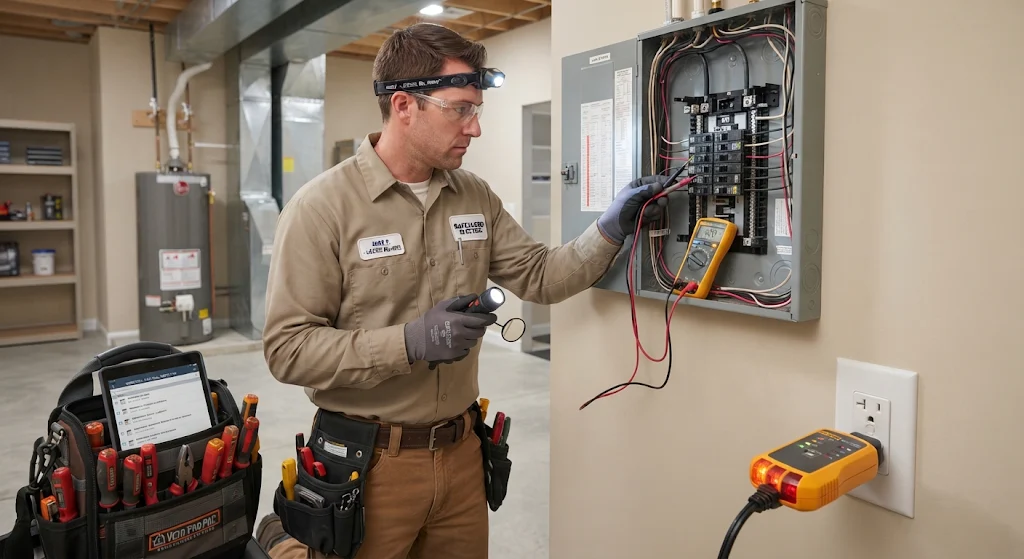
Automated Warehousing & High-Tech Distribution Power in Bentonville
Surrounding Bentonville's corporate core are advanced automated distribution hubs, high-density warehousing complexes, and precision technical fulfillment operations. These facilities rely on sophisticated electrical automation - including heavy-duty 480-volt motor control centers (MCC), high-speed automated sorting conveyors, robotic packaging machinery, and industrial battery charging banks.
Independent industrial electrical contractors serving Bentonville provide engineering-grade support for heavy power distribution. Technicians install heavy rigid metal conduit (RMC) and bus duct distribution, program variable frequency drives (VFDs) for smooth motor acceleration, perform harmonic power quality studies, and execute scheduled switchgear maintenance to avoid costly distribution downtime across Northwest Arkansas supply chains.
Industrial Power Systems, 480V Switchgear, Motor Control Centers (MCC) & Plant Machinery
Industrial electrical installations operate at the demanding intersection of heavy manufacturing machinery, high-voltage distribution, continuous production cycles, and harsh operating environments. Industrial facilities rely heavily on 480-volt, three-phase power to drive high-horsepower electric motors, heavy refrigeration compressors, automated conveyor networks, and specialized process heating equipment.
Unplanned industrial downtime costs manufacturing plants thousands of dollars per hour in halted output and lost production. Maintaining robust switchgear, motor control centers (MCC), variable frequency drives (VFDs), and heavy conduit distribution is vital to plant productivity, operational safety, and regulatory compliance.

Common Situations Requiring Industrial Electrician
Key signs, property conditions, and project needs that indicate professional electrical evaluation is appropriate in Bentonville.
- Motor overheating, nuisance thermal overload tripping, or repeated insulation failure in heavy production motors.
- Harmonic distortion, voltage sags, or power factor penalties on utility bills caused by large inductive motor loads and variable frequency drives.
- Aging 480V switchgear, disconnect switches, or bus ducts showing signs of thermal discoloration, loose bus connections, or insulation aging.
- Need for new heavy machinery electrical hookups, production line relocations, or plant floor automation wiring.
- Malfunctioning programmable logic controllers (PLCs), sensor networks, or industrial safety interlocks halting automated packaging lines.
- Requirements for classified hazardous location electrical wiring (Class I, II, III) in dusty grain processing, chemical handling, or paint spray areas.
Structured Diagnostic & Installation Protocols
Industrial electrical contractors utilize advanced diagnostic tools including infrared thermography, vibration analysis, power quality logging, and high-voltage insulation resistance testing (Megger) on motor windings and distribution feeders. They evaluate motor starting currents, power factor correction capacitor banks, and harmonic filter performance to ensure plant electrical efficiency.
Field installations include rigid metallic conduit (RMC) bending, cable tray layout, pulling heavy 500 kcmil or 750 kcmil copper feeders, terminating motor control centers (MCC), programming variable frequency drives (VFDs) for soft starting and speed regulation, and integrating emergency stop safety circuits. Contractors work closely with plant engineering staff to minimize downtime during scheduled shutdowns.
High Fault Current Safety: Industrial electrical services frequently connect to massive utility substations capable of delivering tens of thousands of amperes of available fault current (AIC). Strict compliance with OSHA Lockout/Tagout (LOTO), arc-flash labeling, and NFPA 70E safety standards is mandatory to protect personnel from lethal electrical blast hazards.
Compliance & Utility Clearances in Bentonville
The City of Bentonville Community Development (Building Inspections) oversees electrical permitting and safety inspections throughout Bentonville. Substantial projects—including service modernizations, panel replacements, new branch circuits, transfer switches, and commercial wiring—require formal permits and mandatory inspections to verify code compliance.
Utility coordination is managed through Bentonville Municipal Electric Utility. When an electrical project requires utility power interruption, meter base upgrades, or transformer coordination, licensed contractors schedule clearances with the utility in compliance with municipal inspection approvals.
Schedule Industrial in Bentonville
Connect with an independent electrical contractor serving Bentonville. Call our referral desk at (888) 605-9975 to discuss your project with an intake coordinator.
Other Electrical Services in Bentonville
Discover additional electrical service categories available from independent contractors in Bentonville.
EV Charger Installation
Dedicated 240V 40A to 60A Level 2 EV charging stations, hardwired circuits, load calculations, and energy management systems.
EV Chargers in Bentonville →Commercial Electrician
Commercial wiring, three-phase distribution, retail buildouts, LED retrofits, tenant improvements, and scheduled facility maintenance.
Commercial in Bentonville →FAQs: Industrial Electrician in Bentonville, AR
Specific questions regarding Industrial Electrician projects, local permitting, and independent contractor matching in Bentonville.
Facilities rely on 480V, 3-phase, 4-wire power distributed through heavy copper busway ducts and secondary step-down dry-type transformers feeding 208Y/120V automation control panels.
VFDs regulate starting current spikes, provide soft-start acceleration, and match motor speed to dynamic production line speeds, reducing mechanical belt fatigue and lowering facility power demand charges.
Industrial work complies with NFPA 70 (National Electrical Code), NFPA 70E (Electrical Safety in the Workplace), and OSHA 1910 Lockout/Tagout regulations to protect technicians from arc-flash hazards.
Contractors utilize digital three-phase power analyzers to track voltage sags, phase unbalance, and total harmonic distortion (THD) caused by non-linear computerized power supplies and motor drives.
Yes. Industrial electricians handle disconnecting, rigging power cables, rerouting heavy conduit, and reconnecting machinery during plant line reconfigurations and equipment additions.